Millennials’ Wealth Falls 6.48% in a Year Amid Real Estate Value Decline, StatsCan Reports

Millennials’ Wealth Falls 6.48% in a Year Amid Real Estate Value Decline, StatsCan Reports
As real estate values decline, millennials are facing significant challenges in building wealth. Experts suggest prioritizing aggressive savings and investing over early homeownership. Here’s a look at how changing economic conditions are impacting young Canadians’ financial futures.
Key Takeaways
- Millennial households have seen their wealth decrease by 6.48% over the past year, primarily due to falling real estate values.
- Millennials’ average net worth is now around $493,423 per household, while older generations experienced wealth growth.
- Real estate declines have significantly impacted millennials, with home values dropping nearly 9% year-over-year.
- High housing prices and rising interest rates discourage new millennial buyers, while those who bought during low rates face mortgage renewal challenges.
- Experts suggest early aggressive saving and investing in the stock market as alternatives to homeownership for young Canadians.
Millennials’ Wealth Falls as Real Estate Values Drop

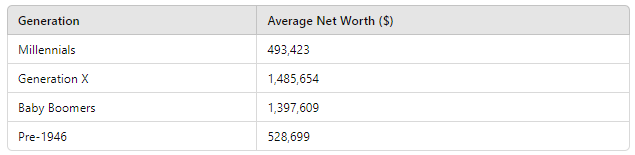
Recent data from Statistics Canada indicates that millennials are facing increasing wealth disparity compared to older generations. Over the past year, the net worth of millennial households has decreased by 6.48%, reaching $493,423 per household in the second quarter of 2024. In stark contrast, other generations, including Gen X and Baby Boomers, have continued to build wealth.
Gen Xers now boast an average net worth of $1,485,654, while Baby Boomers’ wealth averages around $1,397,609 per household. Households of Canadians born before 1946 saw their net worth grow to $528,699.
Real Estate’s Role in Wealth Decline
The primary factor driving this wealth gap, experts say, is the drop in real estate values. Millennials’ real estate holdings have plummeted by nearly 9% year-over-year, compared to a 2% decrease seen among all other households. Toronto-Dominion Bank economist Maria Solovieva highlighted that those who purchased homes during the period of low interest rates in 2020 and 2021 are now witnessing a significant depreciation in their home values.
The latest figures from the Canadian Real Estate Association support these claims. Since the peak in March 2022, where the average home price reached $852,000, values have dipped to an average of $713,200 as of September 2024.
Challenges in the Housing Market
Millennials who are not already homeowners face an additional hurdle. With high housing prices and rising interest rates, many are hesitant to enter the market. Those who did buy homes during periods of low interest rates are now grappling with financial stress as their mortgage renewal terms shift to higher rates.
“This is a group that is at a disadvantage,” stated Carrie Freestone, an economist at the Royal Bank of Canada. She explained that unlike previous generations who leveraged real estate as a primary vehicle for building wealth, many millennials are now priced out of the market.
The Future of Wealth Building for Millennials
Cindy Marques, a financial planner specializing in millennial clients, noted that this generation’s wealth challenges extend beyond the housing market. Millennials have faced multiple recessions, rising student debt, and a competitive job market with limited access to high-paying jobs. Additionally, many millennials are reporting job losses and difficulties in finding new employment.
Yet, there is a silver lining for some. Statistics Canada data reveals that millennials were the only generation to cut back on spending while increasing their savings. Marques believes that while the pathway to wealth may differ from previous generations, it is still achievable for young Canadians.
Alternative Paths to Wealth
Marques recommends that millennials focus on aggressive early savings and investing. She noted that a 25-year-old investing part of their income over just a decade could end up with $250,000 more by the time they retire, compared to a 35-year-old investing over 30 years. She suggests that millennials should prioritize building financial security before pursuing homeownership.
“You have $100,000 saved by the time you’re 30 and let that grow, and you’re set up for substantial financial freedom by retirement,” Marques advised. She added that homeownership might be more realistic once younger Canadians have more financial stability and a solid credit profile.
Shifting Priorities
While traditional paths to wealth, such as homeownership, remain a challenge, younger generations are finding new ways to achieve financial freedom. Some are opting to spend their money on experiences, like travel, or choosing more flexible, nomadic lifestyles rather than chasing the homeownership ideal of previous generations.
Source: Financial Post